Why contrast feels collected.
A considered room rarely matches perfectly. It finds its character in the conversation between opposites.
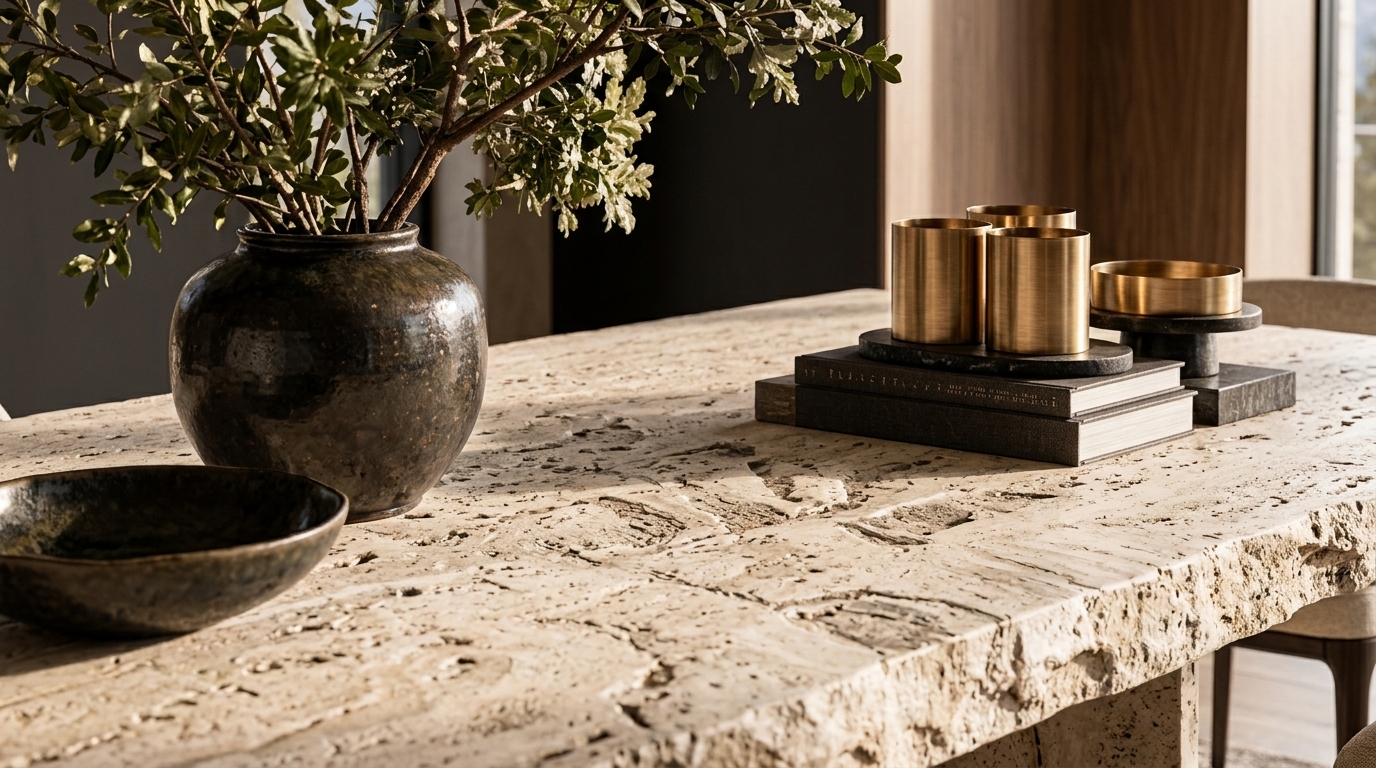
Walk into a room that feels genuinely considered and you will usually notice one thing before you can name it: nothing competes, but not everything agrees. The stone is cool beside the warmth of timber. A generous, softly upholstered chair stands against crisp architectural lines. The light touches a bronze detail and then falls away into shadow.
This is contrast at its best. Not a dramatic statement for its own sake, but a way of giving a room depth and a sense that it has been collected slowly, with care.
Begin with a quiet foundation.
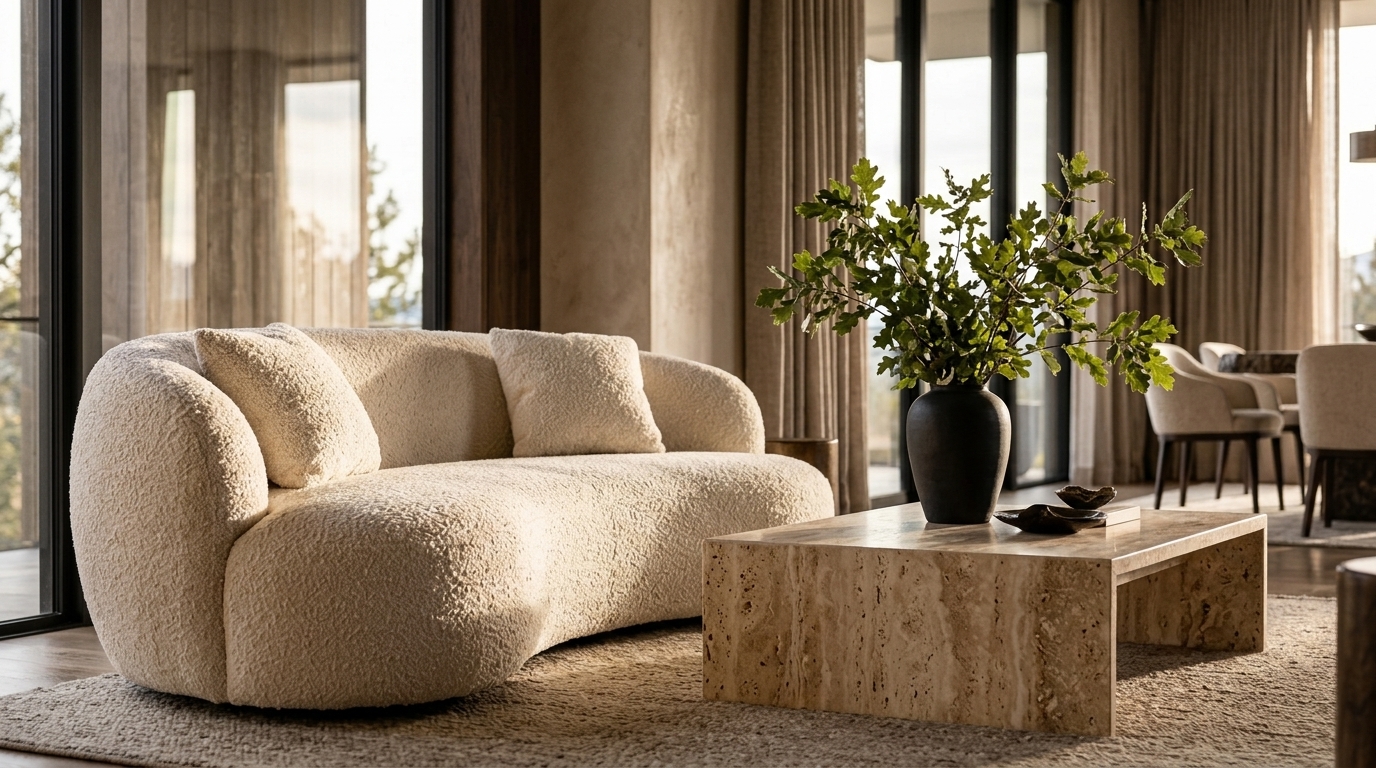
Contrast works most naturally when there is something calm for it to respond to. In a contemporary living room, that might be warm plaster walls, an ivory sofa and a restrained floor finish. Together they establish a consistent background that lets a darker object or textured surface have more presence.
There is no need to make every finish identical. In fact, when every surface shares the same tone, texture and sheen, the room can feel flat even when the individual pieces are beautiful. Introduce variation with purpose: a walnut sideboard against pale plaster, a stone table beside a boucle seat, or one dark ceramic vessel on a light shelf.
Balance hard with soft.
Some of the most satisfying combinations are tactile. Marble, travertine and glass bring definition. Linen, leather, wool and boucle temper that definition with comfort. Each material makes the other easier to appreciate.
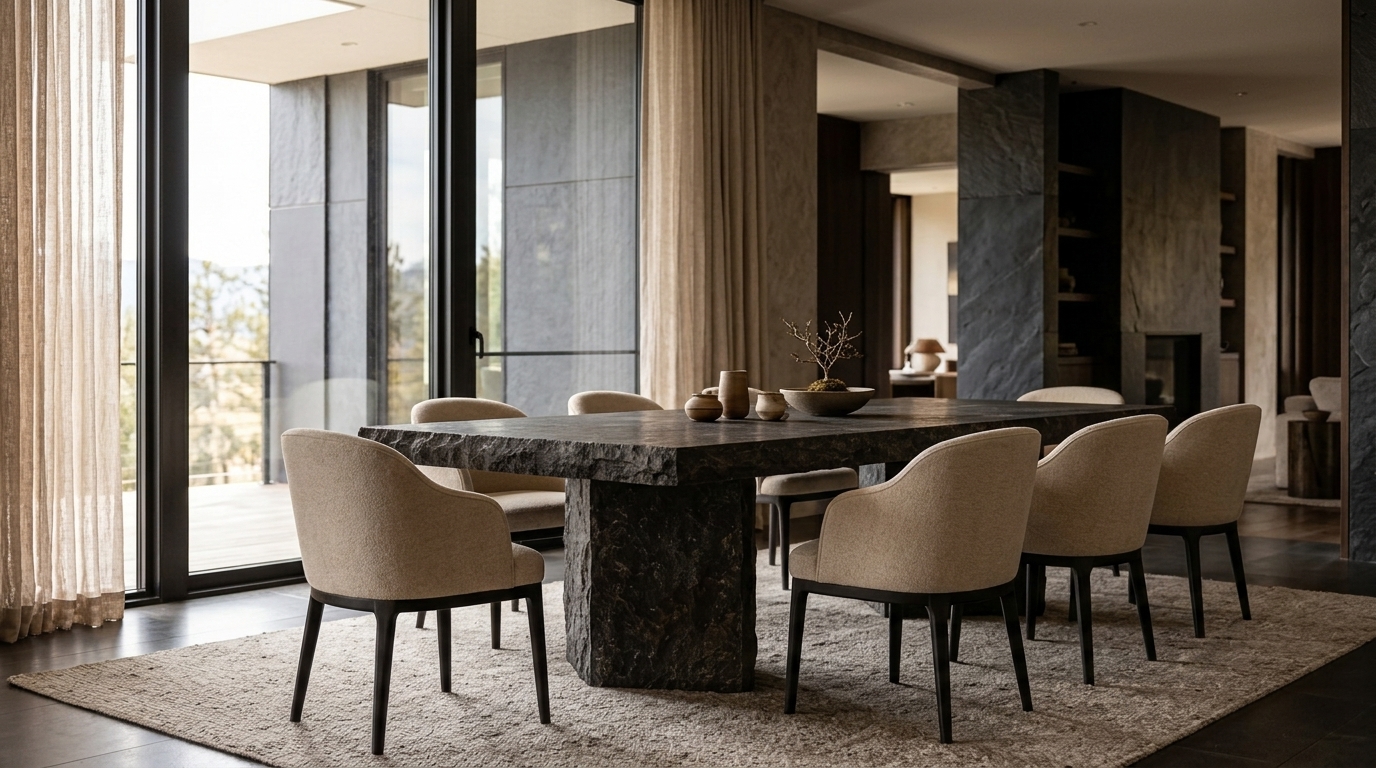
Consider a dining area with a substantial stone table. If the chairs are equally hard and severe, the arrangement can feel imposing. Upholstered seats or rounded chair backs make the table more inviting without taking away its architectural strength.
Restraint gives an object room to speak. Contrast gives it something worth saying.
Mix finishes, not just colors.
Contrast is often described as light against dark, but finish is just as influential. Matte ceramics beside polished metal, open wood grain beside honed stone, or a brushed brass detail against dark cabinetry introduces a richness that a single color palette cannot achieve by itself.
Keep one or two materials dominant and let the others become accents. If every element wants to be the feature, the room quickly loses its hierarchy.
Let one piece interrupt the pattern.
A room of quiet neutrals might need only one expressive chair, a bold slab of stone or an unexpected vintage form. The best accent changes the pace of the room without introducing a completely different conversation.
This is where personal taste matters. A piece with a history or a silhouette that simply makes you pause can bring more character than a carefully matched set. It is that human touch that makes a space feel collected rather than purchased all at once.
Try this at home.
Choose one surface in your room and look at what sits beside it. If the textures, tones and finishes are nearly identical, change just one element. Place a dark vessel on pale stone, add a textured throw to a smooth chair, or pair a warm wood accent with a cooler metal. Edit before adding anything else.
The result should feel effortless. Your eye moves from object to object, noticing subtle differences and finding a reason to stay. That is the appeal of a room with contrast: it has rhythm, but never feels noisy.