A dining room should hold the evening.
Beyond the dining table is the real measure of a gathering space: how easily people arrive, linger and feel at home.
A memorable dining room is not necessarily a formal one. It is the place where the conversation continues long after the plates are cleared, where someone pulls their chair closer and the room somehow makes time feel less important.
That kind of atmosphere is designed. Not through excess decoration, but through thoughtful scale, comfortable seating, flattering light and space to move naturally.
Give the table a sense of purpose.
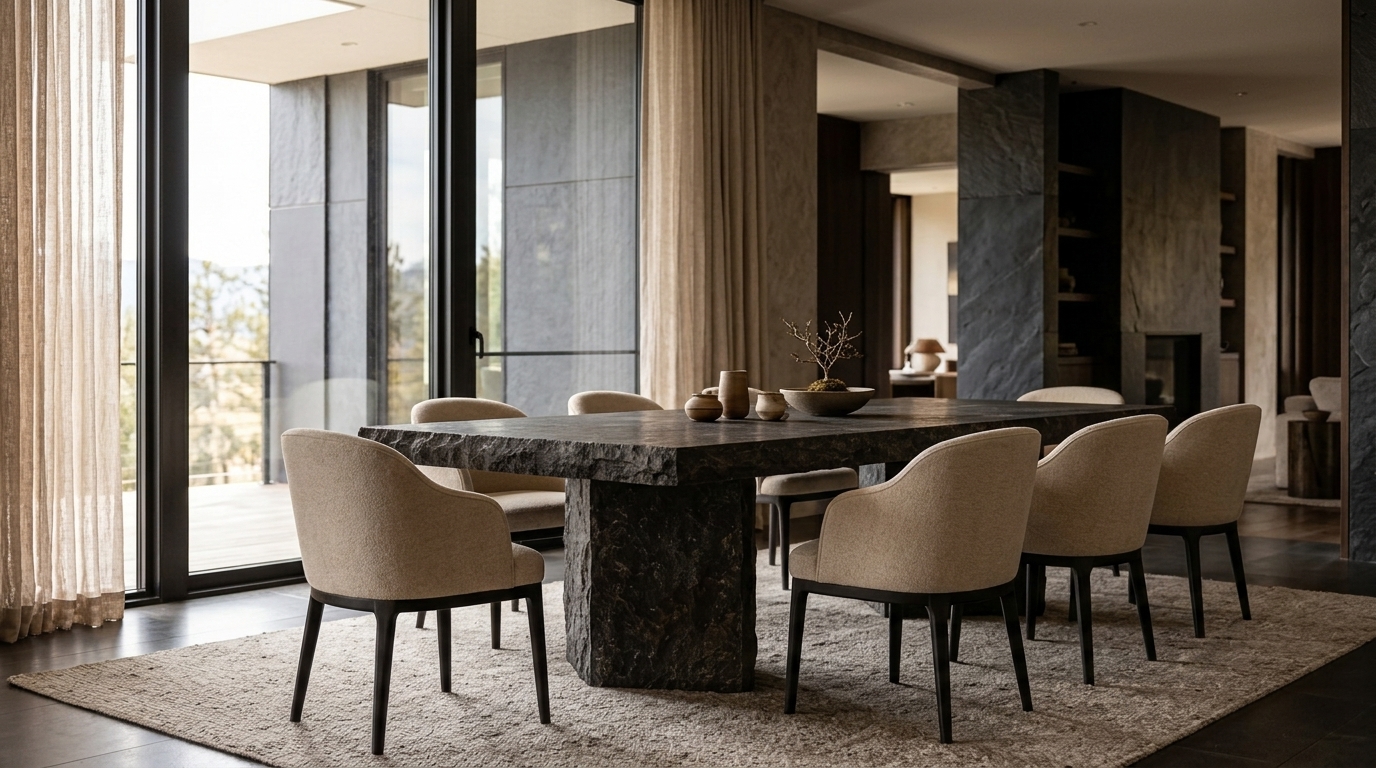
The table sets the tone. A monolithic stone slab brings permanence and presence; dark timber can feel grounded and intimate. In either case, the table should suit the way the room is used, not simply fill the center of the floor.
Consider its shape, the number of people who gather there most often and the way the room connects to adjacent spaces. A generous rectangular table can anchor an open-plan interior, while a round table invites a more equal, conversational setting in a compact room.
Allow room for movement.
Space around a dining table matters as much as the table itself. Guests need to pull out their chairs, stand up without disturbing the person beside them and move to another part of the room without feeling squeezed.
Before deciding on a table, place a few dining chairs where they will actually sit and imagine them pulled back. Notice the path from the kitchen, the door and any buffet or bar area. If traffic becomes awkward, the furniture is asking too much of the room.
Choose chairs people want to stay in.
Seating should feel welcoming before anyone sits down. Upholstered backs, comfortably proportioned seats and reassuring support make a difference over a long meal. A sculptural chair can still be practical; the best examples give form and comfort equal attention.
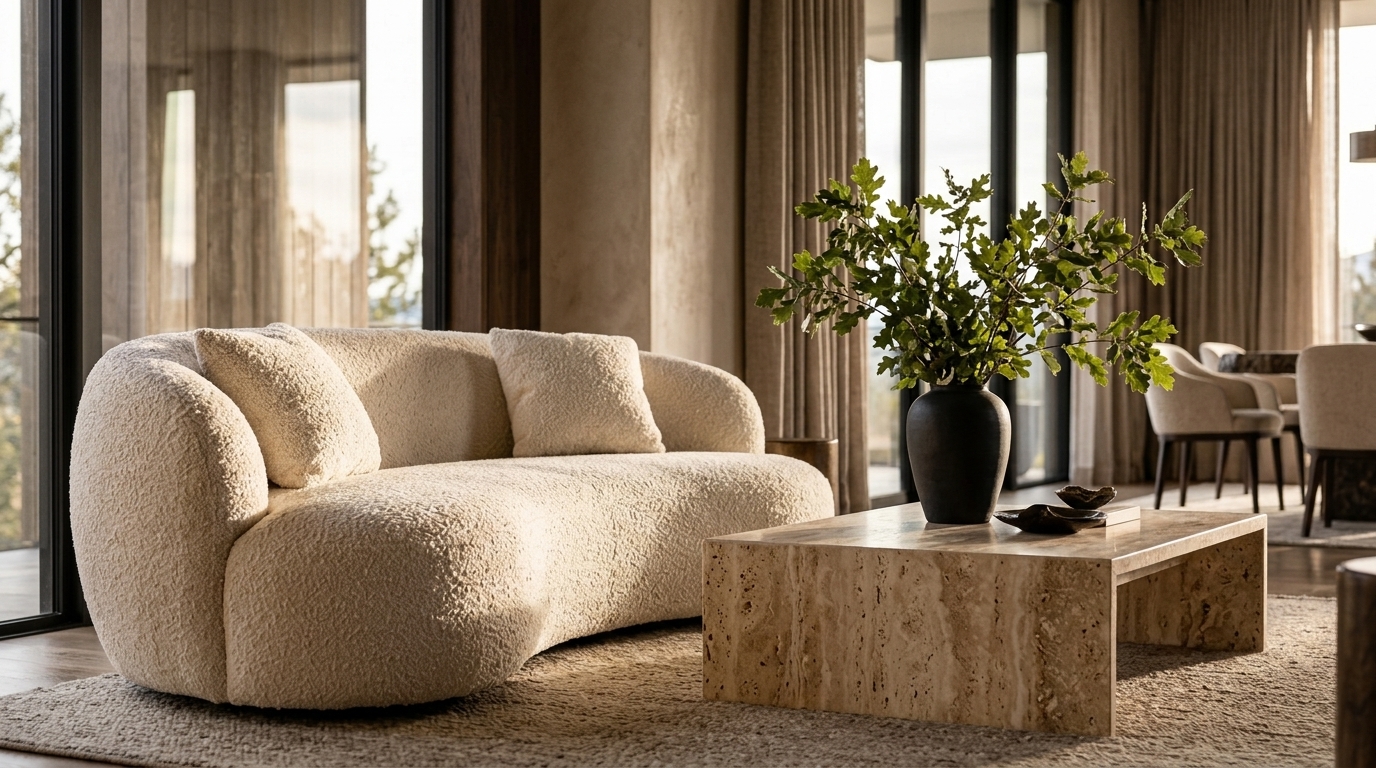
Mixing a substantial table with softer chairs is also an easy way to introduce material contrast. Smooth stone becomes less severe when paired with bouclé or leather, while visible walnut adds warmth to contemporary silhouettes.
The evening lasts longer when the room gives people a reason to remain.
Light the people, not just the furniture.
One bright overhead fixture rarely creates the atmosphere you want. A pendant can define the dining zone, but layers of warm light around it help everyone feel more comfortable. Use wall lights, nearby table lamps or dimmable ambient lighting to soften the edges of the room.
Think about the view at seated eye level. A fixture should feel intentional without interrupting the conversation across the table. Its glow should bring faces and food into gentle focus, rather than making the room appear like a showroom.
Make space for the unplanned moment.
A sideboard holding glassware, a surface for serving and a discreet place for everyday clutter will make a dining room much easier to live with. These are practical details, but they also give the room a feeling of readiness.
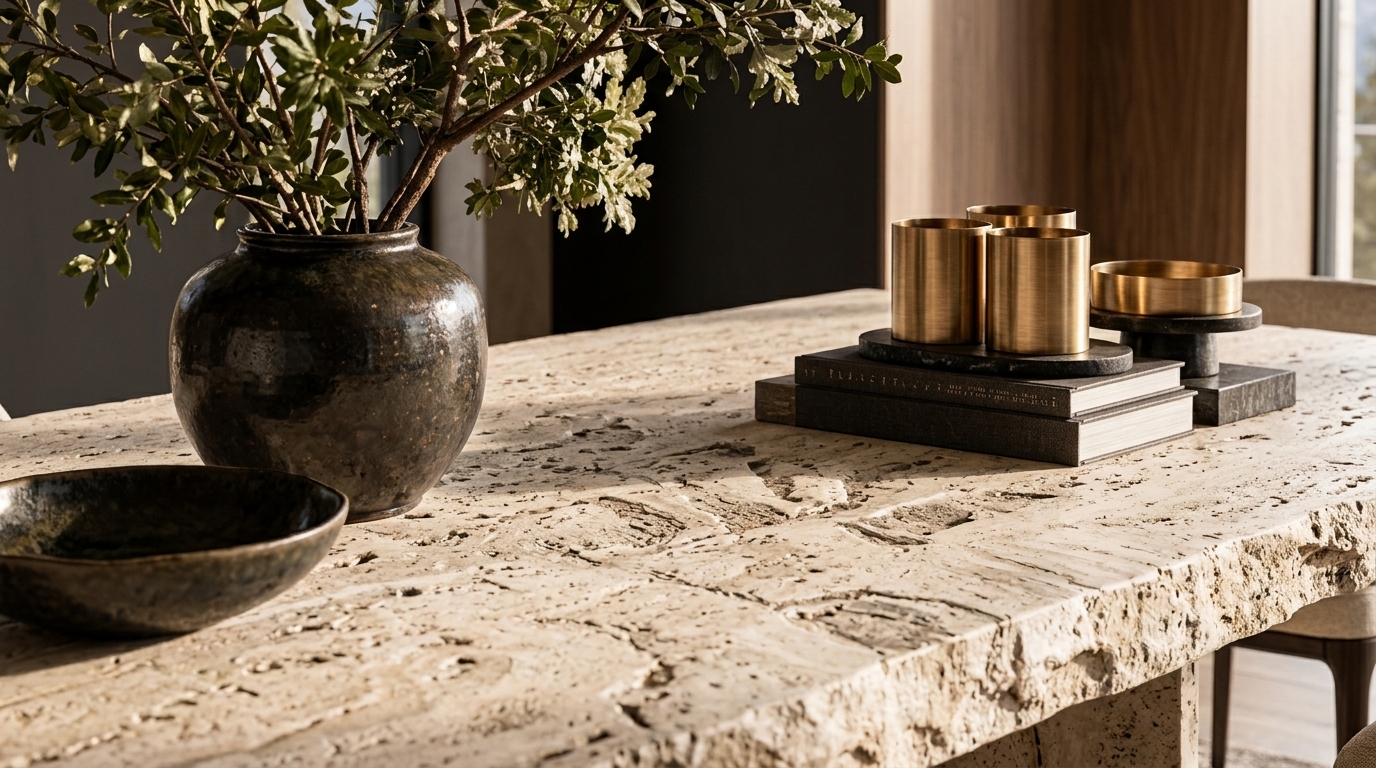
Decorate lightly. One generous arrangement, a ceramic bowl or a few beautiful objects can add identity without taking over the table. The people gathered around it should always remain the center of attention.
Before the next gathering.
Sit at each place setting, not just the chair you normally use. Check the sight lines, pull-out space and light. Notice whether there is an easy place to put a serving dish or a water carafe. The smallest adjustments often make the evening feel much more relaxed.
A good dining room never feels finished only when it is photographed. It comes alive when it is used, when chairs shift and stories stretch, and when the space quietly holds all of it.