Curves make a room more human.
Soft edges bring a sense of ease to contemporary architecture, balancing strong lines with furniture that invites you in.
Modern architecture gives us wonderful things: long views, generous planes of glass, beautifully crisp details and a clear sense of order. But a room made only of straight lines can sometimes feel more precise than welcoming.
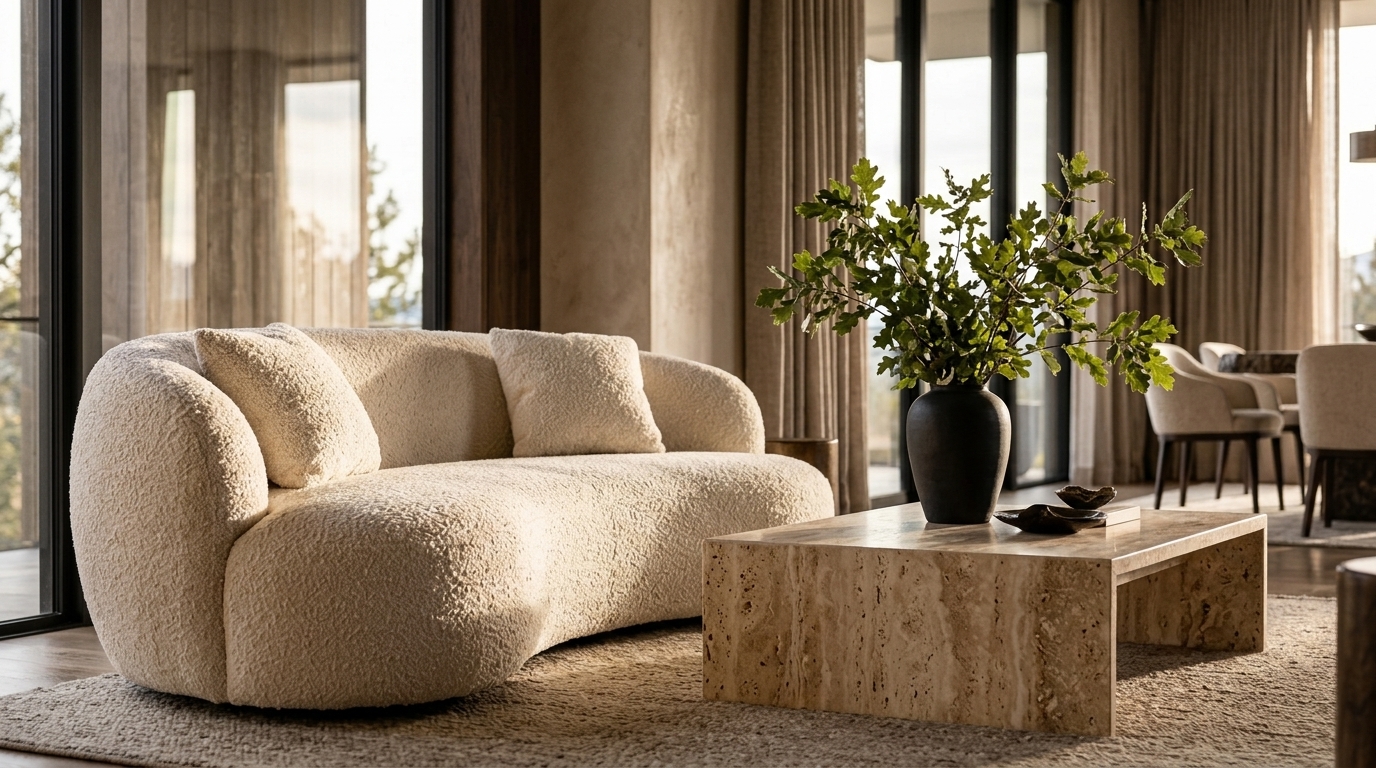
Curves provide a counterpoint. A rounded sofa, a generously cushioned lounge chair or the softened edge of a table can change the way a space feels almost immediately. They bring the architecture back to the scale of the person living in it.
Start with the way a room moves.
Furniture shapes circulation. A room with sharp corners and rigid arrangements can create a series of hard stops, even if it has plenty of space. Introducing a curved silhouette can soften that movement and help people navigate the room more naturally.
It might be an oval coffee table in a busy living area, a softly rounded sofa in an open space or a circular side table tucked between two seats. Each change encourages the eye and body to move more fluidly.
Use softness against architecture.
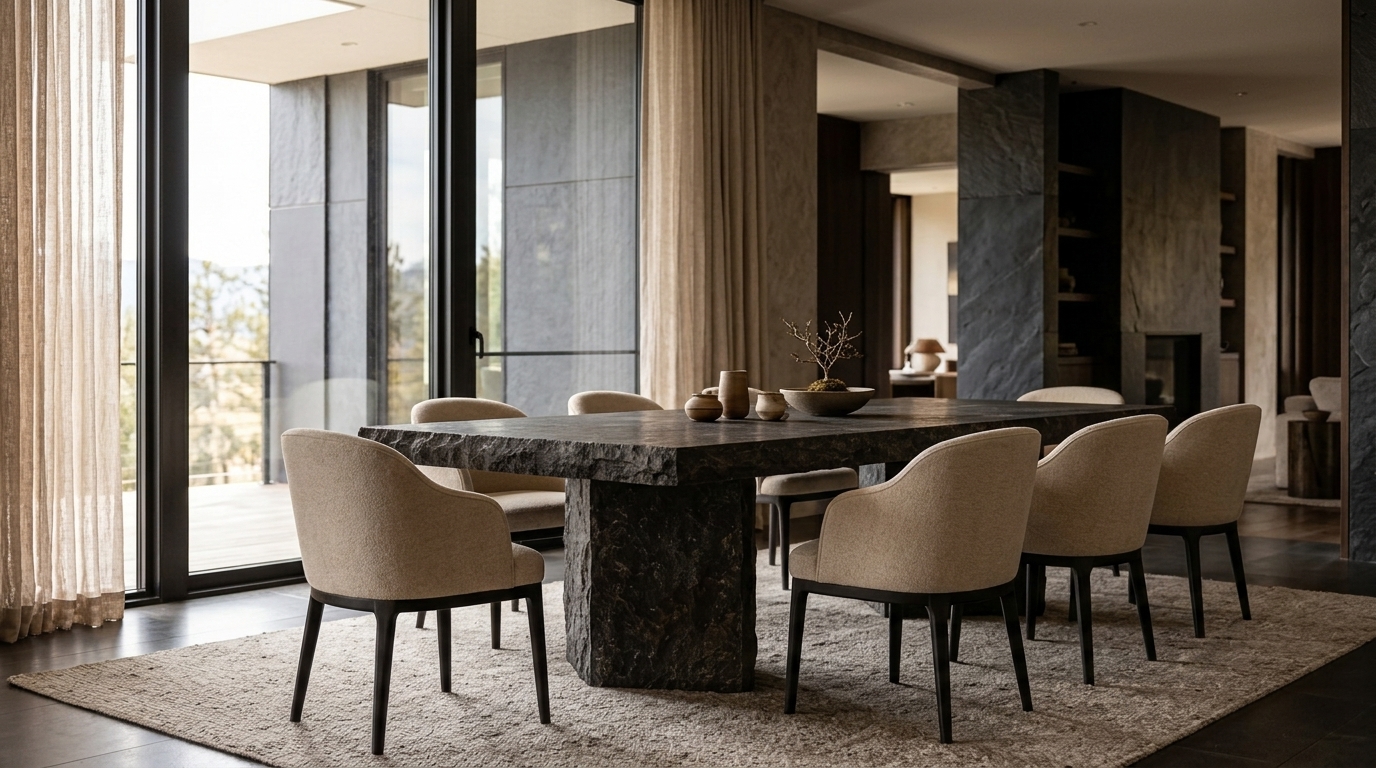
Curved furniture is especially compelling beside strong architectural surfaces. Picture a low, rounded bouclé chair against dark stone, or a relaxed sofa set in front of a wall of tall glazing. The contrast gives both elements greater impact.
A room does not need to be completely rounded to feel soft. In fact, a few generous curves are often more effective when the surrounding architecture remains clean and structured.
Let proportion lead the choice.
Oversized rounded furniture can make a statement, but the scale needs to suit the room. A deep lounge chair feels luxurious when it has room to breathe. An enormous sculptural sofa in a modest space can become an obstacle instead of a comfort.
Pay attention to the space around each piece. Leave enough circulation between objects and consider how the furniture relates to doorways, views and the other elements of the room.
A softer shape can change the mood of a room without changing its architecture.
Texture makes the curve believable.
Curves feel particularly inviting in tactile materials: bouclé, velvet, leather, finely woven linen and softer wool blends. These surfaces catch light gently and emphasize the form without becoming overly decorative.
Pair them with firmer materials for balance. A rounded sofa beside a rectilinear stone table feels grounded. A curving lounge chair and a dark walnut cabinet can have just enough tension to keep the composition interesting.
Give each shape a role.
If every object is curved, the room can lose definition. Choose one or two pieces to lead the composition, then let straighter silhouettes provide quiet structure. The resulting balance feels deliberate but not rigid.
The same principle applies to smaller pieces. Rounded ceramics, an oval mirror or an arched lamp can echo the shape of the main furnishings without feeling like a matching set.
Try a softer arrangement.
Stand at the doorway and trace the route your eye takes across the room. If every line ends abruptly, add one rounded element near the center of the composition. It might be a chair, table or vessel. Then remove anything that competes with that shape.
Good modern design is not only about clean lines. It is also about comfort, welcome and a sense of belonging. Curves remind us that a home should be lived in, not simply admired.